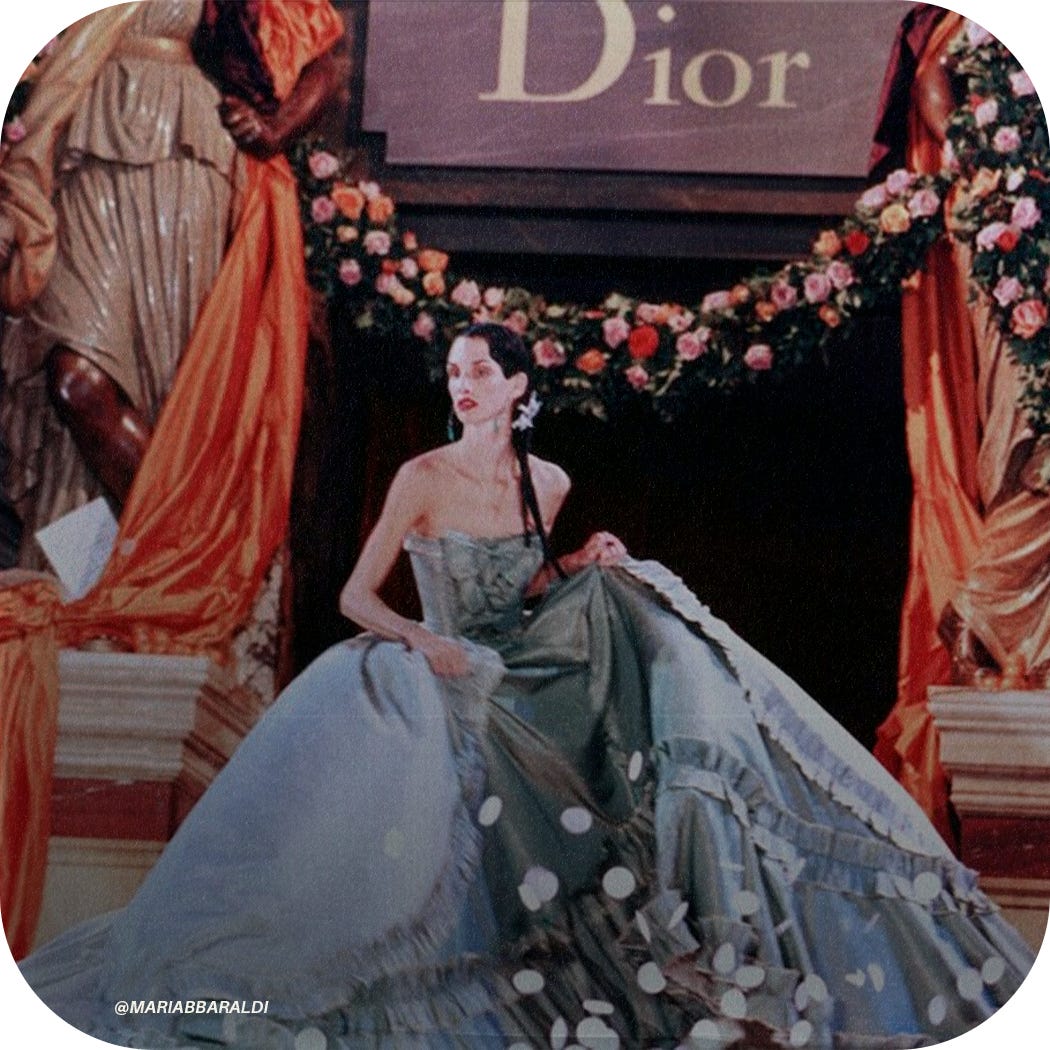
Haute Couture shows still exist because they sell. Not in profit, but in desire.
In recent years, we’ve watched the luxury industry lose its way. The obsession with attracting aspirational clients turned hype into the most powerful (and dangerous) strategy. When those clients were hit by economic uncertainty, brands responded by raising prices far beyond inflation to keep profits up, even while selling fewer items. The problem? Those higher prices rarely came with better quality.
So, what’s the point?
If luxury is now driven by margins and hype, why does the most expensive, least scalable part of it still survive?
1. What Is Haute Couture?
Technically, only brands listed on the official calendar of the Chambre Syndicale de la Haute Couture can claim this title. To qualify, they must present two collections a year (January and July, in Paris), employ at least 15 full-time staff in their atelier, and craft pieces where almost everything is made by hand.
In the 1960s (right after WWII and the rise of ready-to-wear) haute couture was practically dead. Most of the major Maisons we know today were close to shutting down.
But in the 1980s, when Bernard Arnault acquired Dior indirectly, he made a surprising move: he wanted to bring haute couture back.
So we go back to the same question:
Why would a corporate businessman, through and through, want to revive the most expensive, exclusive segment in fashion?
Marketing.
So much of what we remember as iconic fashion in the 1990s (Galliano at Dior, Tom Ford at Gucci, McQueen at Givenchy, Marc Jacobs at Louis Vuitton) came from this shift. The brands wanted spectacle. Big shows. Creative freedom. Supermodels. Something that would capture global attention.
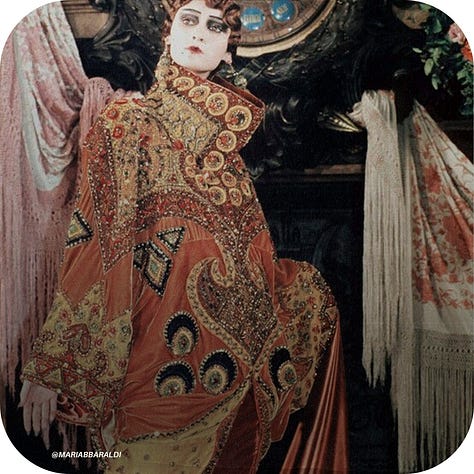
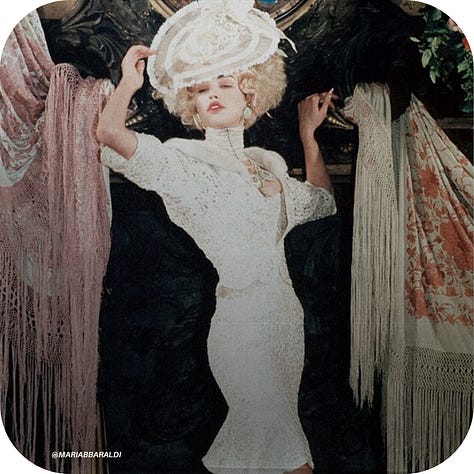
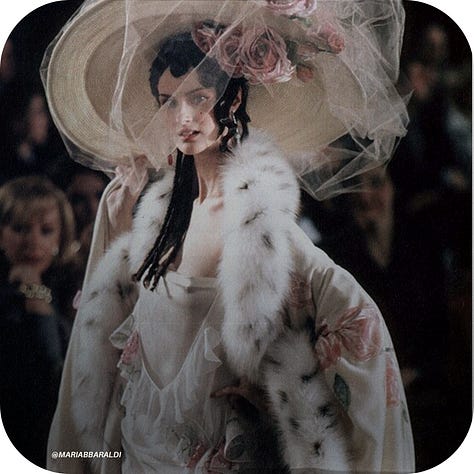
Dior - Haute Couture - SS 1998
Since then, we’ve lived through recessions, pandemics, the rise of quiet luxury, and a sober aesthetic era. But one thing never changes:
Every year, we still get two couture shows to watch.
2. Halo Effect
The halo effect is a cognitive bias where we assign general positive qualities to something (or someone, or a brand) based on a single positive impression.
“For example, this could happen when people think a person is a good person—or has
many positive qualities—just because the person is attractive.”
All the marketing around haute couture is, in the end, a vehicle to sell RTW collections, handbags, small leather goods, beauty lines, and perfume.
You have to give people a reason to justify paying luxury prices, whether it’s for a lipstick or a full leather dress. Not every product within a luxury brand is made with the same level of attention and craftsmanship as a couture piece, but that doesn’t really matter.
Because the consumer believes that the same brand showing a jaw-dropping runway with millennia-old craftsmanship techniques is probably also making a beautifully crafted bag, a lipstick that feels different, and so on.
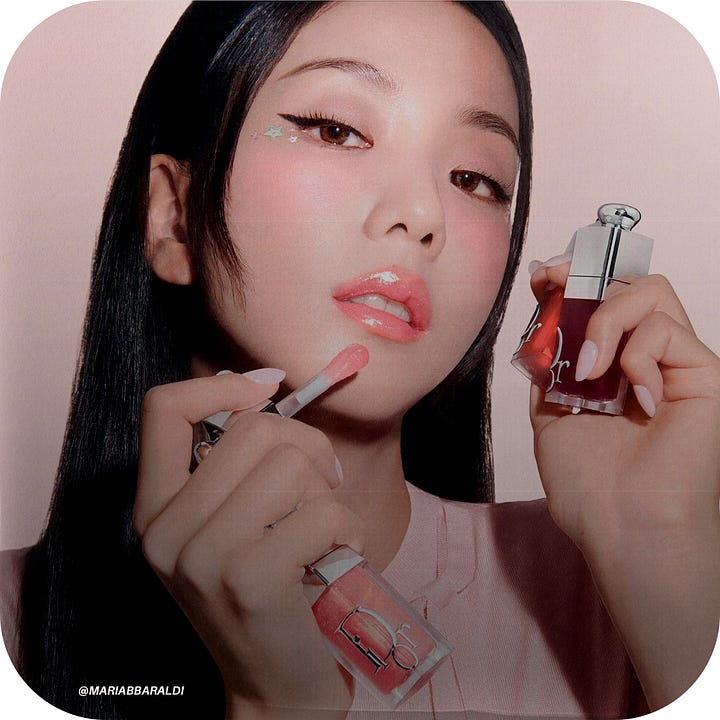
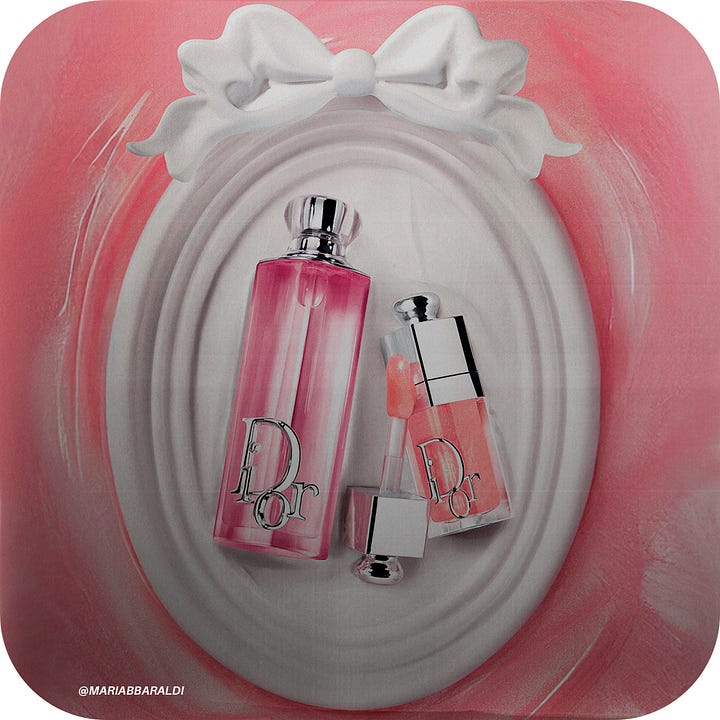
It’s about selling the perception of couture across every single touchpoint.
That’s why so many people dream of owning a designer bag without really knowing the technical details. They assume that if a brand hosts stunning shows, creates dreamy campaigns, is worn by celebrities and rich people — then that brand must be doing everything else well too.
Selling high-ticket items without giving your audience a bigger vision and dream is much harder.
I’m the first to say that product matters, but good product doesn’t sell itself.
You need a narrative. You need world-building. Something that makes people truly feelthe desire to buy.
Because that’s the point: every purchase starts with emotion.
People buy with emotion first, and then justify it with logic. First we feel desire, then we explain why it makes sense.
We don’t buy just what the product delivers technically. We buy what it representsemotionally.
The best way to add value and create desire is by showing that the product fulfills emotional expectations, that it represents more than just function or service.
But let’s be clear: while good product can’t sell itself, bad product can absolutely destroy everything your brand has built.
3. That’s Why Luxury Went Into Crisis
Doubt kills desire.
Emotion motivates, but logic validates and decides. If the purchase of a product isn’t well justified, it becomes a mental objection. To convert, you need to trigger both emotion and logic at the same time. That only happens when the material reality of your product lives up to the dream you’re selling.
Luxury brands became too reliant on emotional pull, especially for aspirational consumers. And, as I said earlier, we’ve seen prices in this industry rise dramatically over the past few years, without any real increase in product quality.
Add to that:
– scandals around unethical supply chains
– dupes with surprisingly close quality
– the democratization of manufacturing itself
It becomes clear: these brands aren’t delivering the same level of excellence in their regular products as they do in their haute couture shows. And for consumers, that gap is obvious, even when they’re buying from the same house.
Now combine that gap with an unstable global economy and political landscape. Consumers become more aware, more cautious. And they start to question whether the price actually reflects the value.
2025 Luxury Client Index: Winning back aspirational luxury clients
When we compare the performance of major luxury brands with Hermès (one of the few still thriving amid global instability) the message becomes clear:
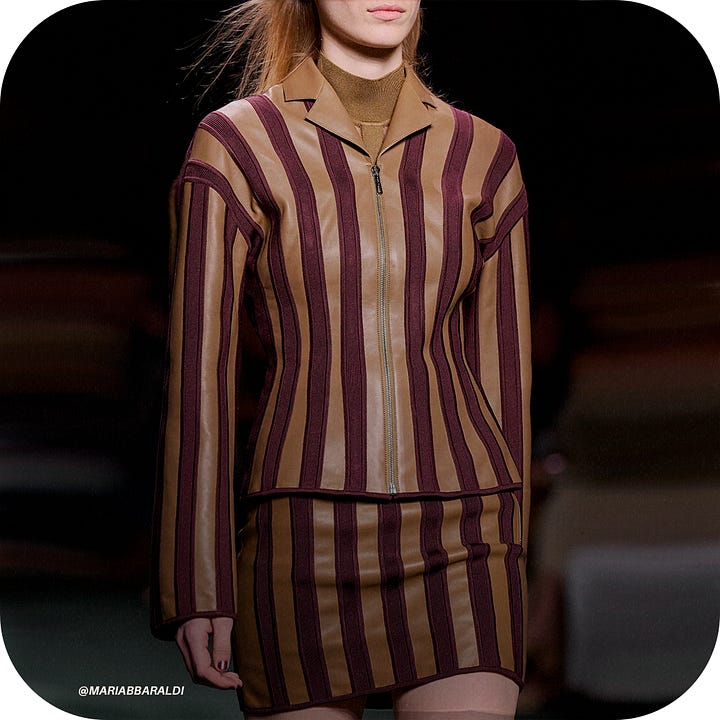
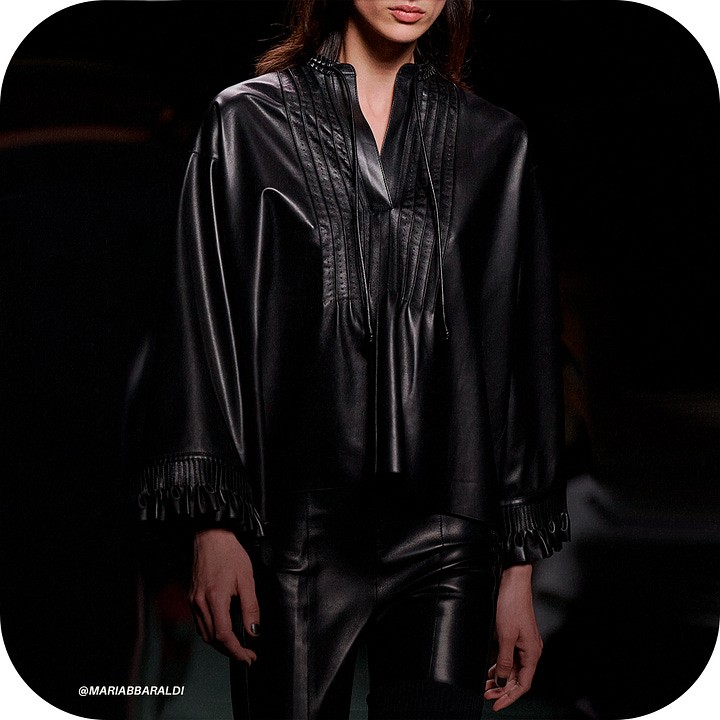
Hermès RTW - Fall 2022
It’s not enough to sell the dream, you have to create desire and deliver on it.
4. How Can You Apply These Principles?
Not even the most famous brands in the world (with nearly unlimited budgets) escape unscathed when they create desire but fail to deliver on it. Not even Haute Couture shows, which are some of the most powerful forms of marketing, can uphold the perception of value and quality if what the customer receives doesn’t match the price tag.
But when everything aligns, we start to see the core structure emerge:
World-building (branding)
Actions that match this universe (positioning)
Communication that amplifies these actions (narrative)
Products that feel like a direct extension of this world (product)
Let’s make it more tangible:
Take Chanel. Its entire world is built on a commitment to craft, attention to detail, exclusivity, a celebration of femininity with a tomboyish twist, and extreme elegance.
This world is made real through positioning.
Chanel owns the Métiers d’Art (the best Savoir-Faire in Paris, and arguably the world) which makes its Haute Couture shows some of the most anticipated of the year.
They invest in arts and culture, from institutions to the Chanel Next Prize.
And even today, they don’t have a traditional e-commerce experience, because maintaining exclusivity is a strategic move.
Their narrative supports all of this.
Their campaigns feature more intellectual or discreet artists.
Their behind-the-scenes videos (especially for Haute Couture) show the intricacies of craftsmanship.
Everything is aligned with their brand universe.
From couture gowns to beauty products, Chanel maintains a high standard. Even mass-produced items have quality that mimics handwork. Femininity comes through in techniques like embroidery, but it’s balanced by sharp lines and restraint that preserve the tomboyish edge.
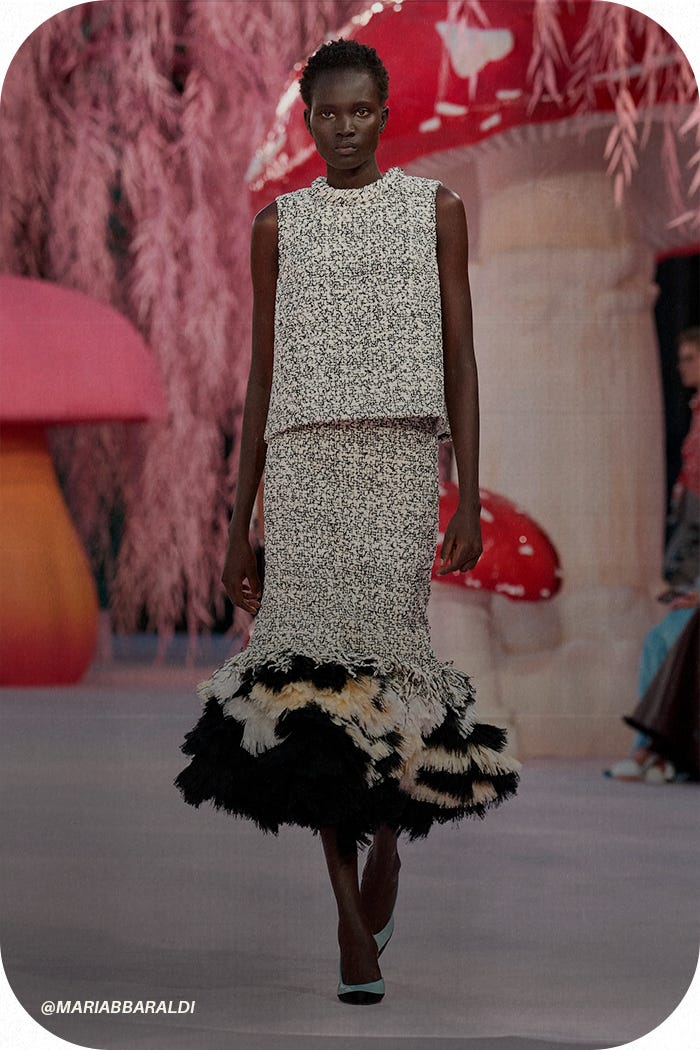
Chanel - Haute Couture - SS26
So how do you translate this couture mindset into your own brand? Here’s how:
Know exactly what world you’re building and who it’s for.
It’s not enough to say your brand is “premium” or “high quality.” That says nothing about who you are or who you’re serving.
Don’t chase trends or replicate what’s working for competitors. Once your brand world is defined, the most important work is honoring it, even if it means going in a completely different direction from the rest of the industry.
Invest in storytelling. Talk about your processes, your values, your design decisions, your materials — and most importantly, who you’re designing for. Build a narrative that is uniquely yours.
And when it comes to product, go beyond the obvious. Of course you should use quality materials, construction, and designs that reflect your identity, but take it further.
If you’re applying the Haute Couture principle to generate desire, treat your next collection strategically:
Choose a few standout pieces: ones with higher quality, bolder design, more innovation. These should have limited stock because they’re not made to sell in volume. They exist to create aspiration. You want your customers to see these pieces and immediately assume every other product in your brand reflects the same level of value and excellence.
These products should also be supported by a strong narrative. Campaigns that don’t just sell the piece, but the dream behind it. (That’s why step 1 is so important, if you don’t know your brand’s identity or your ideal customer, a flashy product means nothing.)
Think of Chanel again: their Haute Couture shows use the most advanced embroidery techniques, and what they really sell is a lifestyle — for someone who can afford to wait, someone who values exclusivity, someone who doesn’t buy just anything from Zara, someone who’s intellectual and understands the cultural and human value of craftsmanship.
Brand building and product development must carry equal weight. One can’t thrive without the other. A great product without a desirable brand collects dust. A desirable brand with a bad product is living on borrowed time.
Haute Couture shows still exist because they sell. Not in profit, but in desire. They don’t generate direct revenue, but they build brand value. These collections sell exclusivity and technical mastery. And by doing so, they justify (logically) the emotional reasons people want to buy, even when the price is sky-high.
If you want to apply the principles of Haute Couture in your brand, but feel like it’s too much to figure out alone — I created the BPA Method, a consulting process that helps premium fashion brands build real desire and translate it into products that are both emotionally compelling and rationally justified.
Want your brand to create Couture-level desire, without the billion-dollar budget? Let’s build it from the brand out. Email me at contact@baraldi.co
Curious to see more of my work? Find me on Instagram: @mariabbaraldi
Let’s keep in touch.
Discover more about high-performance web design. Follow us on Twitter and Instagram.

