Premium and luxury clients are now looking for what should’ve never been lost: quality and good stories.
Summary
Why Consumers No Longer Buy the “Premium” Myth
What to Do About It
Is Your Brand Ready?
Why Consumers No Longer Buy the “Premium” Myth
We’re living in a state of chronic instability: inflation, tariffs, war, the rise of extremist movements, AI acceleration, and an increasingly saturated and noisy market.
In this context, it’s natural for high fashion entrepreneurs to wonder: “Who’s even thinking about buying clothes when the world feels like it’s falling apart?”
But the truth is: money is still circulating. It’s just flowing more selectively, especially in the premium and mid-luxury markets.
Consumers have learned that a high price and aesthetics don’t necessarily mean high quality. In fact, the word “premium” has been so overused it’s nearly meaningless.
From small emerging labels to luxury fashion brands, we’re seeing brands charging inflated prices for products that don’t match in construction, material, or experience — hiding behind aesthetic to justify pricing.
And buyers are noticing. It’s no longer rare to see a brand position itself as premium only to deliver a 100% polyester garment with poor fit or subpar customer service. In a context where shoppers see clothing as an investment (either through longevity or future resale value), this is a fast track to broken trust.
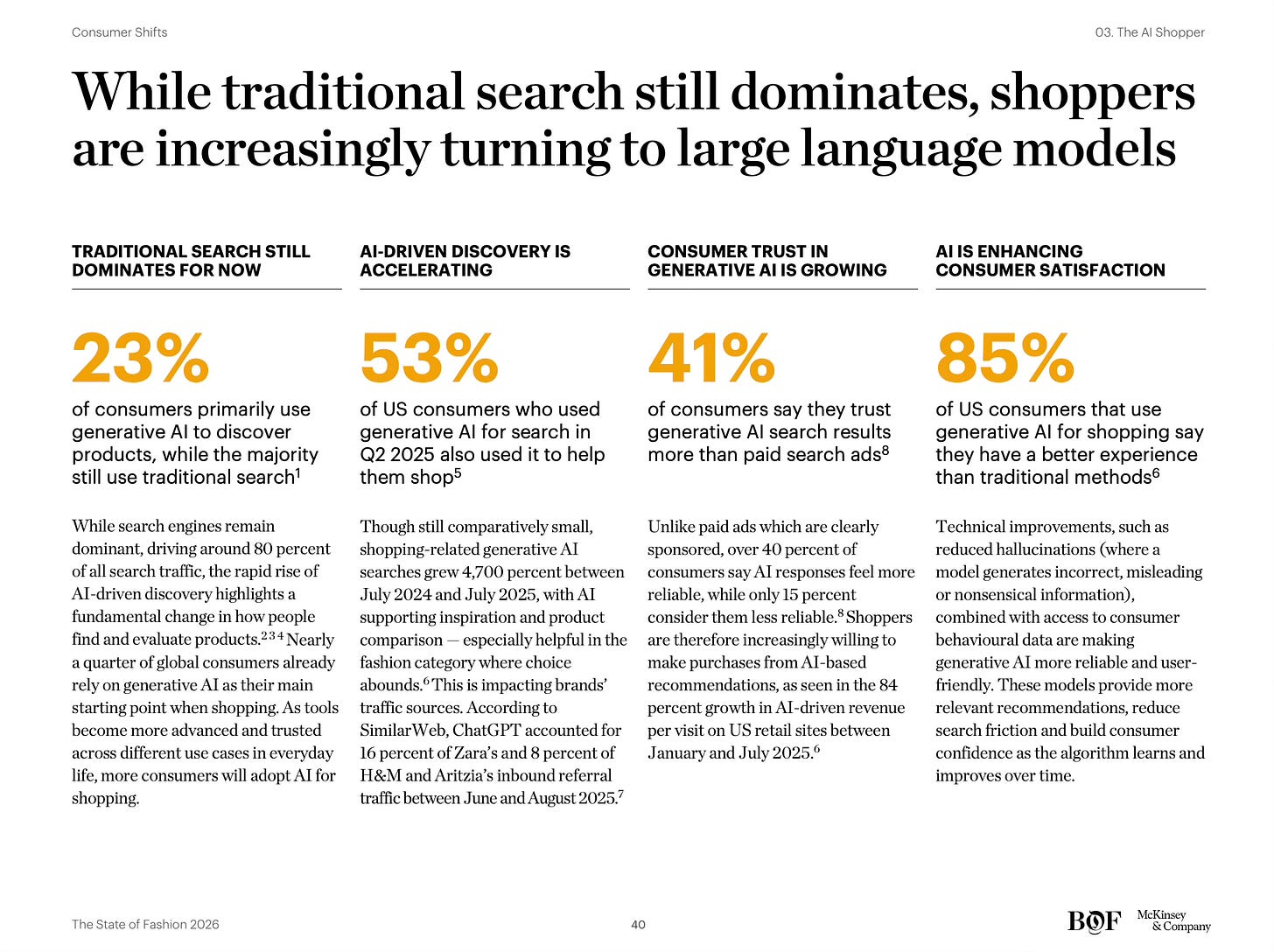
Which is why one of the fastest-rising trends in 2026 is the use of AI for product research and purchase validation. Consumers now rely on tools like ChatGPT or Google Lens to compare price, fabric composition, customer reviews, and brand reputation before buying. What your brand says about itself may not even reach the customer, because AI will translate and summarize it first.
In this scenario, where consumers are smarter than ever and AI can filter through thousands of options, the key question becomes:
How do you make sure your brand is chosen, not just found?
What To Do About It?
If you want to grow a brand without relying on shallow trends, external algorithms, or getting lost in an endless sea of tactics and updates, you need a solid foundation. That means clearly defining every pillar of your Brand Funnel: Brand → Positioning → Narrative → Product.
In today’s environment, this alignment is non-negotiable. The brands that grow in a volatile market are those that build connection. And you can’t connect if you don’t know who you are or who you’re talking to.
Brand Basics
Before you worry about whether skinny jeans are coming back, focus on the fundamentals.
Who are you selling to? What do they need, and how does your brand solve that?
In 2026 and beyond, brands won’t be passively discovered. They’ll need to be actively chosen. And that choice only happens when your brand clearly occupies a role in someone’s life, a role that’s consistently reinforced across every touchpoint.
A few examples:
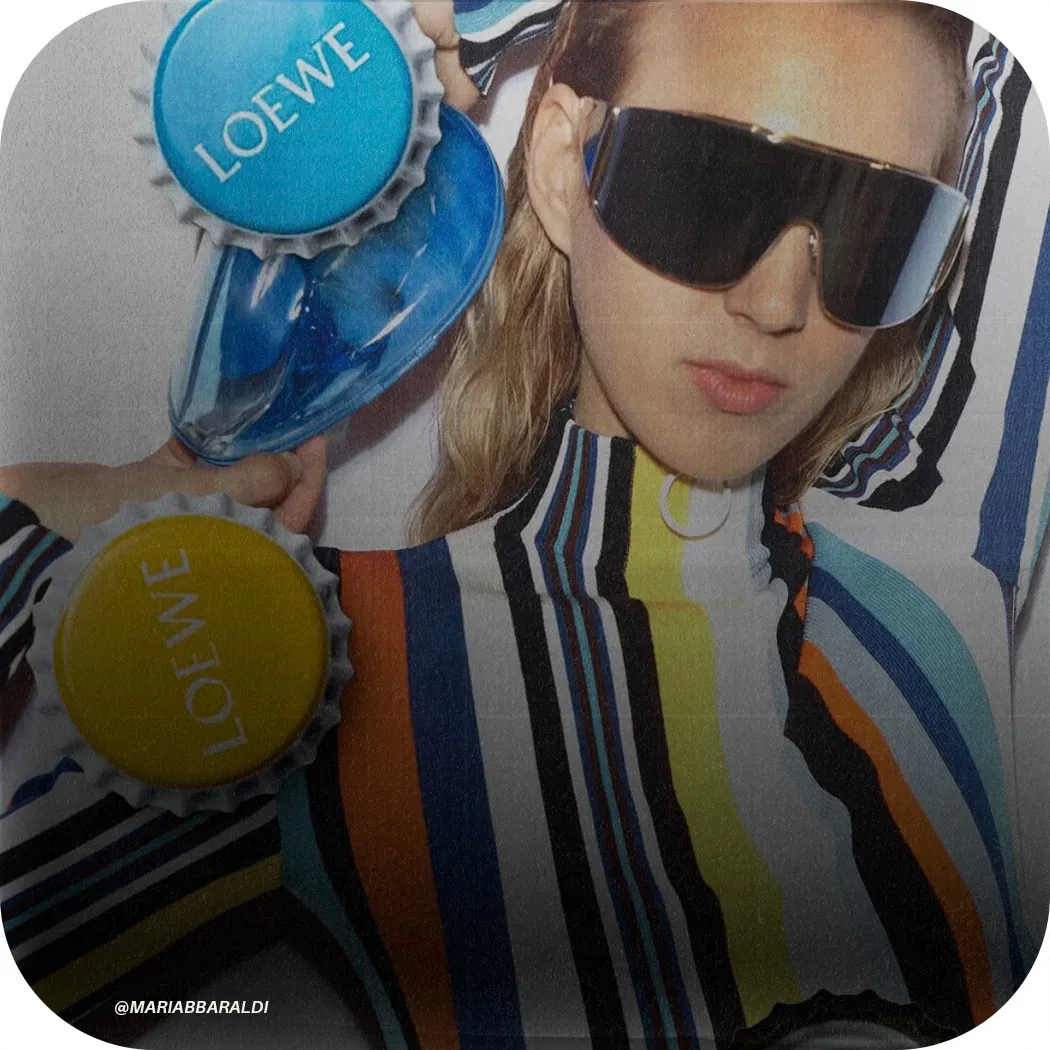
A high-spending client seeking craftsmanship, artistic expression, and understated design might go to Bottega Veneta (for a more sober style) or Loewe (for a more playful one). They won’t ask ChatGPT to recommend it. They already know because these brands make it clear who they are and who they serve.
A younger woman looking for well-structured, versatile clothing that feels elevated but not overpriced? She’ll likely end up at Odd Muse. Again, the value proposition is clear. No AI search needed.
Me? I’m an Apple fan. ChatGPT could recommend the best phone ever made, but if it’s not an iPhone, I’m not buying it. Why? Because nothing integrates with my Mac, iPad, and AirPods like it does. Apple’s promise: simplicity and ecosystem.
Of course, the brands that thrive will be those that find a strong balance: appearing in search tools, but also being memorable enough to be chosen before the search for those who already knew them. Those with clear, emotionally resonant positioning become top-of-mind. The kind of brand someone already wants, even before asking for options.
“In the age of Artificial Intelligence, a high Role of Brand Index is the most powerful antidote to the mediation of agents — allowing companies to own and expand the relationships they have with their customers into new arenas. A high Role of Brand Index means you are competing on the only asset that is not legally replicable — your brand: humans are choosing you because it’s you.”
Interbrand Best Global Brands 2025
Show Don’t Tell
Defining your brand means aligning values, value proposition, and audience, and then acting on it. Especially now, people buy from brands they trust. And trust is built through actions, not claims.
Positioning isn’t a statement, it’s a practice that requires courage (often to say no) and consistency.
If your brand positions itself in the premium/luxury space, your pricing must reflect that (even your entry-level products). You must be intentional with your wholesales, influencer partnerships, materials, finishes, website, and sales process. Every detail must align with your value proposition.
Plenty of brands use the term “premium” and charge premium prices, without delivering the quality or experience to match. But creating experiences that feelpremium? That’s harder to fake.
Back to our earlier examples: Bottega and Loewe walk the talk. Their commitment to craft and art shows up in their campaigns, stores, e-commerce, social impact work — every brand touchpoint. That’s why customers who value exclusivity and transparency actively choose them.
“It’s clear that aspirational clients need to be cultivated [...] What all of this demonstrates is that connecting with clients on the most personal level possible is essential to the ongoing buoyancy of maisons.”
EY 2025 Luxury Index
Storytelling Will Always Matter
Yes, your actions matter. But the impact is stronger when you can also tell the story.
Storytelling is how you structure information to create connection. So share your process. Show the behind-the-scenes. Highlight how you care for your customers and your team. These are not just details, they’re proof of your values. They show who you’re for.
And in the age of AI product searches, that emotional connection may be what sets you apart.
Customers are also craving more meaning. Micro-trends are losing steam. People want brands that reflect who they are. Long-form content is on the rise. Narrative depth matters.
Take Bottega’s campaign ‘Craft is our Language’, in a few minutes, it distills the brand’s ethos with clarity and feeling. Craft is about the human touch. About community. About time and devotion. That’s storytelling that resonates.
“Improving and communicating value for money will be key — through storytelling that highlights craftsmanship, quality or creative differentiation and through initiatives such as repair or resale that position products as lasting investments.”
The State of Fashion 2026
Please, Develop Good Products!
It may be the last pillar in the funnel, but product is where the promise is either delivered or broken. Luxury brands have long relied on emotional pull (especially for aspirational customers) and neglected the product itself. But now, quality is the primary perception driver of luxury.
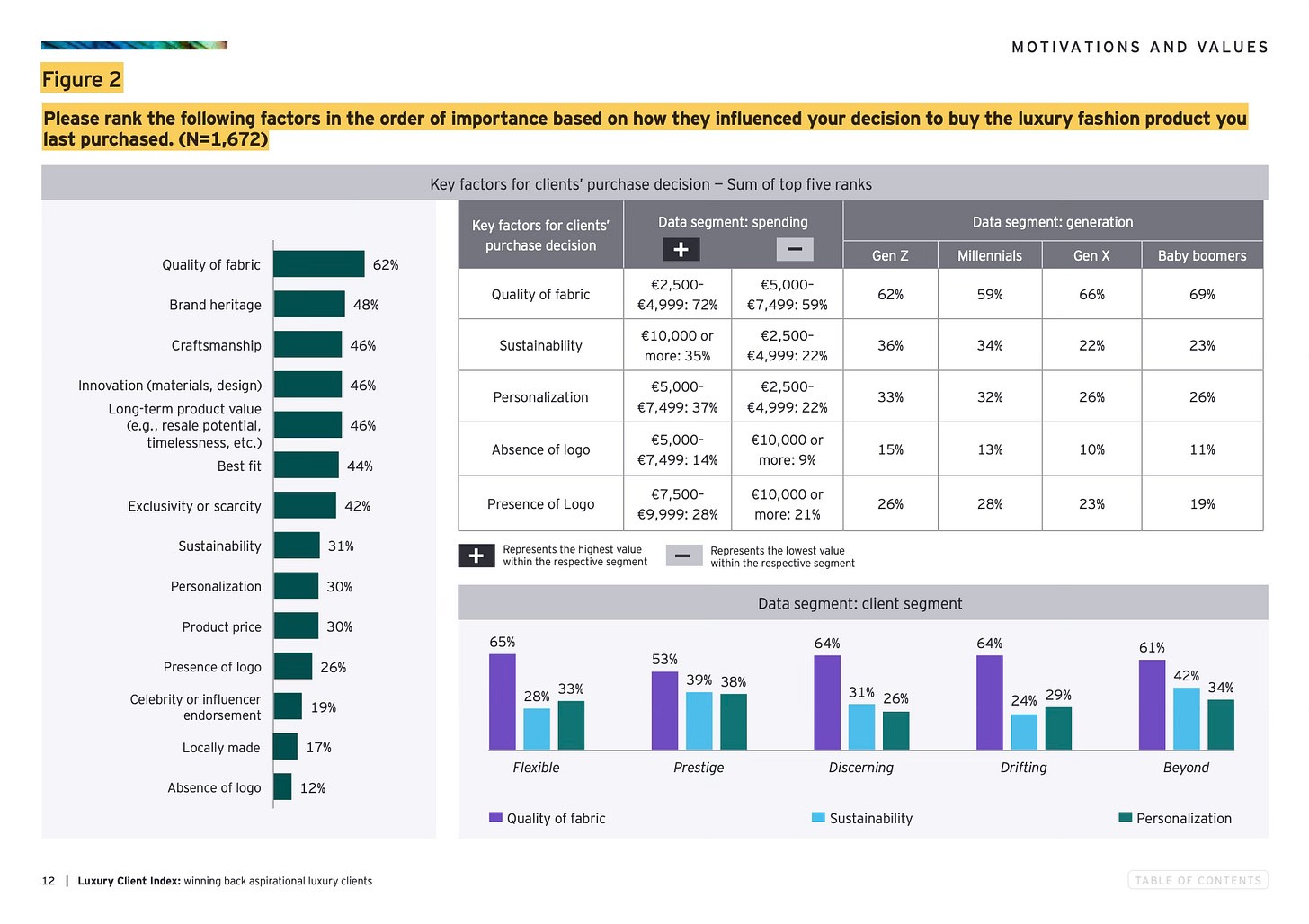
“Although the luxury fashion industry has long benefited from positive price elasticity, with affluent clients associating a higher price tag with high-end luxury, this perspective seems to be changing. Despite the allure of exclusivity and prestige, clients are considering whether prices truly reflect superior quality or are simply a result of brand inflation.”
EY 2025 Luxury Index
Here’s how your brand can deliver perceived (and real) value:
Understand your customer deeply and build an assortment across price points: entry, medium, and high.
Invest in quality materials and construction at every price point. Even your entry pieces must reflect your brand’s values. The value-for-price ratio should be obvious.
Create iconic products: timeless, high-quality, and representative of your brand’s DNA.
Introduce more innovative, higher-end pieces in limited runs. These elevate brand perception, become content anchors, and justify price positioning.
Don’t run frequent sales. Low stock is better than diluted brand value.
Collaborate with other premium brands from adjacent sectors. A well-matched collab in beauty or wellness (especially during cultural moments) can extend relevance.
Packaging is an extension of your product. Make it immersive, intentional, and worth remembering.
“What we found in our research is that any type of experience will drive long-term brand loyalty: A substantial number (83%) of clients indicated that they were likely to make a purchase when complimentary, unique experiences were offered.”
EY 2025 Luxury Index
Even fast fashion brands are adapting: reducing low-price SKUs and investing in better materials. They know they can’t compete with Shein or Temu on price alone. So they’re launching premium lines and capsule collections with designers.
But product elevation only works when supported by consistent brand aesthetics. As we’ve seen, it’s not just about being good, it has to feel like you.
Is Your Brand Ready?
I know, it can be a lot to think about at once. So here’s a quick 2026 checklist to assess your brand:
You know your values and your audience deeply.
You translate that into every touchpoint (website, packaging, partnerships, influencers, etc).
You communicate those choices with intention and storytelling.
You design high-quality products with clear identity, thoughtful assortment and price positioning.
Premium and luxury clients are now looking for what should’ve never been lost: quality and good stories. When you return to the real principles of these markets, your brand can grow — even in this new cultural context.
These aren’t temporary trends. They’re signals of where consumption is headed.
If your brand doesn’t yet have the clarity to turn these shifts into product and positioning, let’s talk!
I’m opening a few 1:1 spots in my fashion design and branding studio, to help founders like you translate strategy into reality!
📮 Reach out at contact@baraldi.co
Let’s keep in touch.
Discover more about high-performance web design. Follow us on Twitter and Instagram.

