

Why doing more usually makes things worse
For this season, your team gathered beautiful references.
You liked most of the trends.
You probably have a lot of ideas you’re excited about.
But that excitement doesn’t last very long.
Because then you remember the dead stock from previous collections.
The times you had to run promotions just to move products.
And how hard it actually was to sell some of those new ideas.
If you’ve been in this situation more than once, the solution is not launching more, marketing more, or discounting more.
And the frustrating part is: you’ve probably already tried all of that.
The good news is, the answer is already inside your brand.
If you’re already dealing with slow sales, excess inventory, and constant promotions, adding more products into the mix usually makes things worse.
It sounds obvious, but let’s actually look at what’s happening.
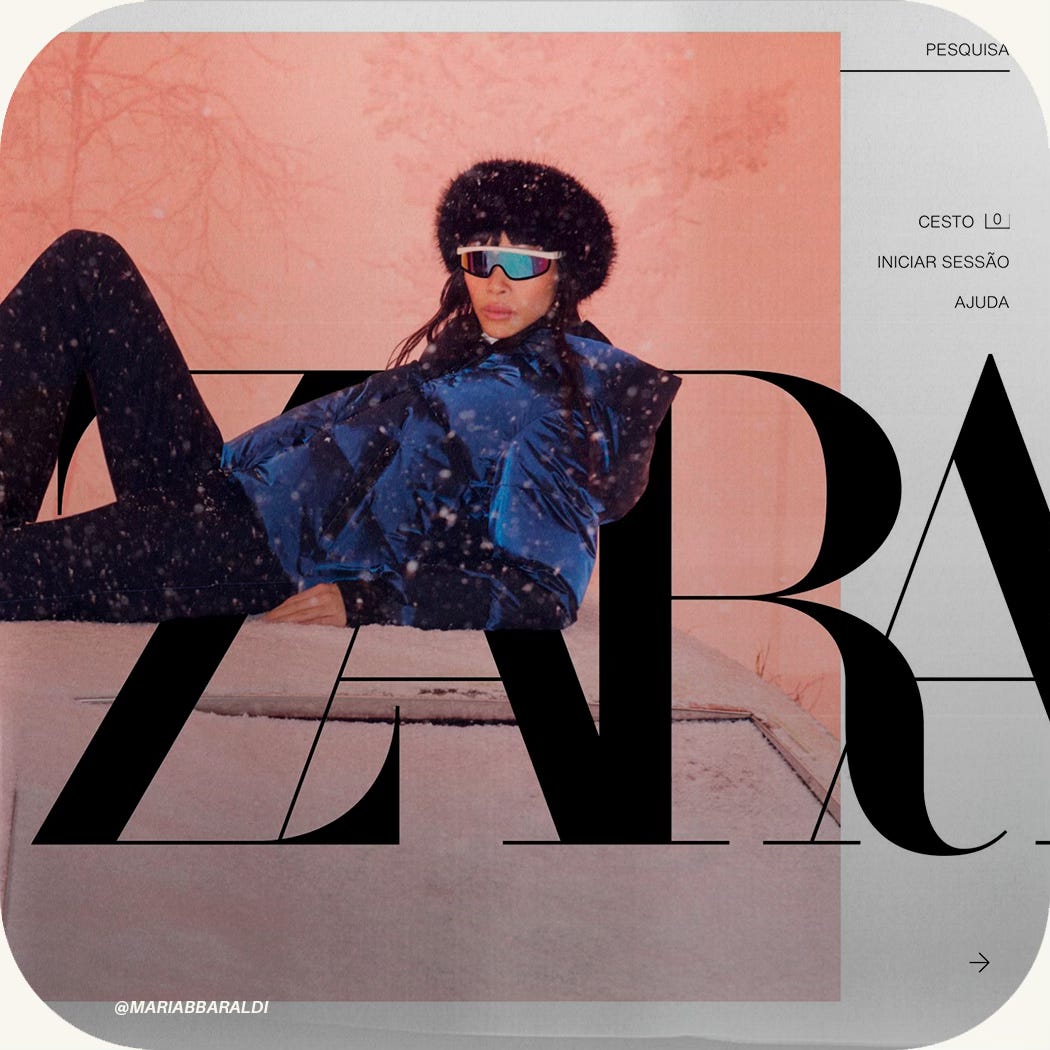
Zara - Home Page
Most brands assume that a collection didn’t perform because of something specific: maybe the timing wasn’t right, maybe the product mix was off, maybe the communication didn’t land.
So they move on quickly and launch again (hoping the next one will fix it).
But if this has been happening for multiple seasons, the problem isn’t the collection, it’s how the collections are being planned.
Because developing a strong collection requires more than good references and good taste.
Once you start launching more just to “see what works”, a few things begin to happen:
You accumulate more stock (some pieces sell, but many don’t)
You rely on promotions to move that stock
You start attracting price-sensitive customers
Your repeat purchase rate doesn’t grow
Without noticing, you start competing on price (and let’s be honest, that’s a game that’s very hard to win today)
At the same time, your operation becomes more complex.
More launches = more production, more decisions, more pressure on your team.
And that starts to show:
in product quality
in communication
in the overall perception of your brand
Costs go up, margins get tighter, and even when something sells well, it might not actually be that profitable.
On the marketing side, two things usually happen:
If the product isn’t right, marketing won’t fix it. At best, it brings more people who won’t convert.
When you have too many launches, your communication loses focus. Your team is trying to talk about everything at once without a clear direction.
Notice how this becomes a cycle:
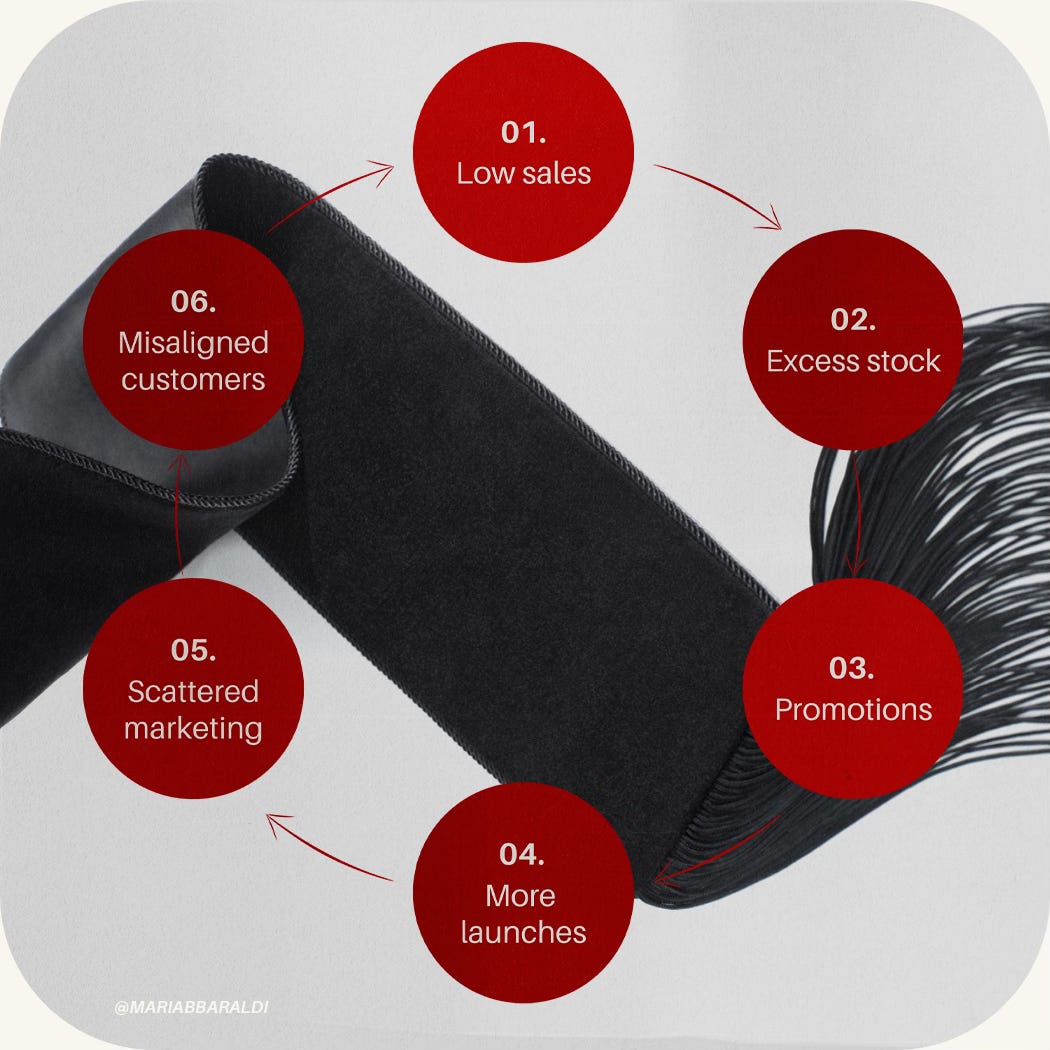
Low sales → Excess stock → Promotions → More launches → Scattered marketing → Misaligned customers → Low sales again
At the end of this cycle, you and your team are exhausted. Each launch comes with more pressure, more doubt, and less confidence.
So… what do you do instead?
Just stop.
Really.
Before starting this cycle all over again, you need to slow down and look at three things:
Your brand and your customer
Your data
Your product planning
The answer is already inside your brand
The first step is to stop looking at products in isolation. Before anything else, you need to understand your brand, and who it is actually for.
What does your brand sell beyond the product?
For example:
The Row doesn’t just sell clothes; it sells restraint, discretion, and a certain kind of social differentiation through simplicity.
Prada doesn’t just sell clothes; it sells intellectual identity, cultural references, and a specific way of seeing the world.
Alo Yoga doesn’t just sell activewear; it sells a lifestyle centered around wellness and time for yourself.
All of these are built for very specific people. When this is clear, decisions become easier.
You start to understand:
which trends make sense
what to take from your references
which colors to use
which silhouettes are aligned
And most importantly, what isn’t for your brand.
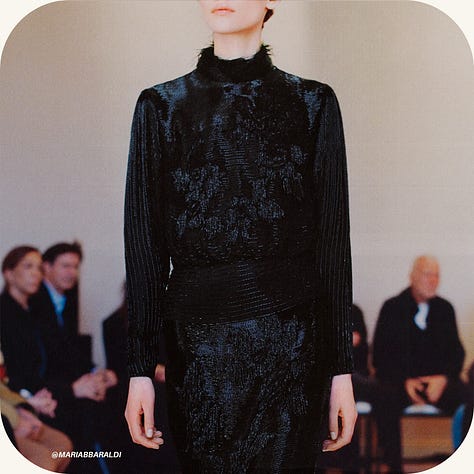
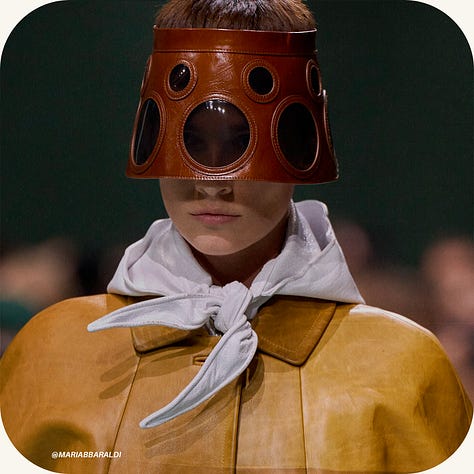
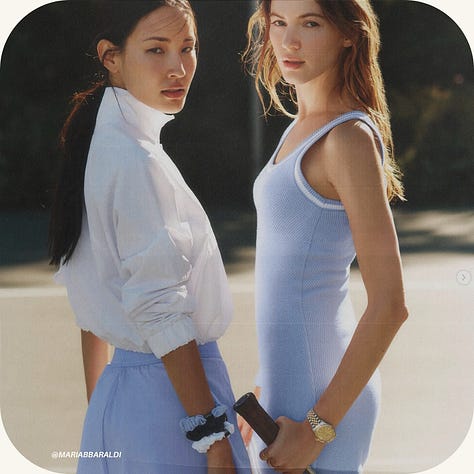
1. The Row Resort 27 - 2. Prada SS25 - 3. Alo Tennis Edit in Light Provence Blue
Open your sales data (and yes… you’ll need a coffee)
Now it’s time to look at what actually happened, start by organizing your products into categories, and if needed, subcategories.
For example:
Category: dresses
Subcategory: mini, midi, long, printed, plain
Then look at:
what sold well
what didn’t
and how that compares to your inventory
Let’s say printed dresses represent 10% of your sales, but 30% of your stock. That means something is off. For your next launch, you’ll need to think more carefully about this type of product, whether because your customer didn’t like the print itself, the color, or because they don’t like prints at all.
Also, always analyze by season.
What works in summer might not work in winter, and vice versa.
When you have solid numbers about your sales, stock, and categories, connect this back to your brand and customer.
Going back to The Row example, if they had excess stock in printed dresses, it wouldn’t be surprising, because it doesn’t align with the brand’s core: restraint.
And if they were to introduce prints, it would probably be:
very controlled
very intentional
and tested in small quantities first
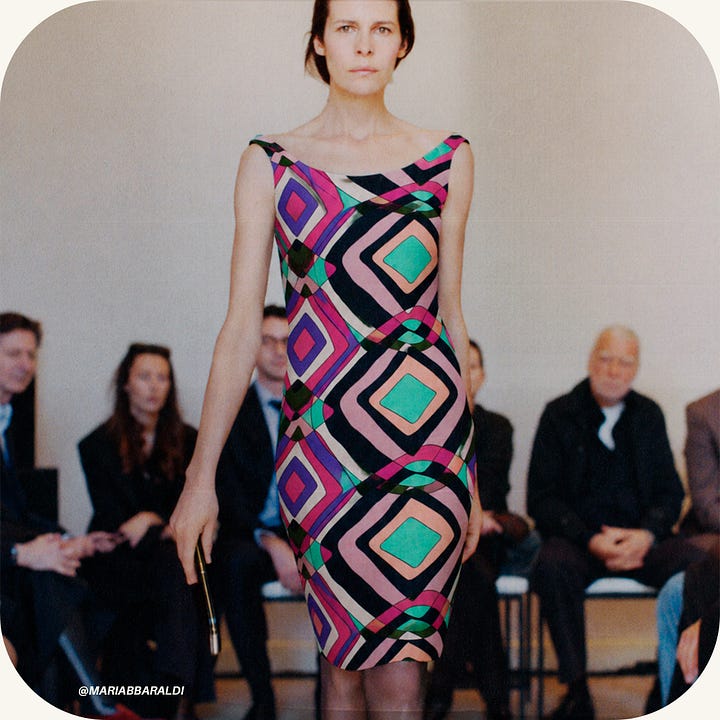
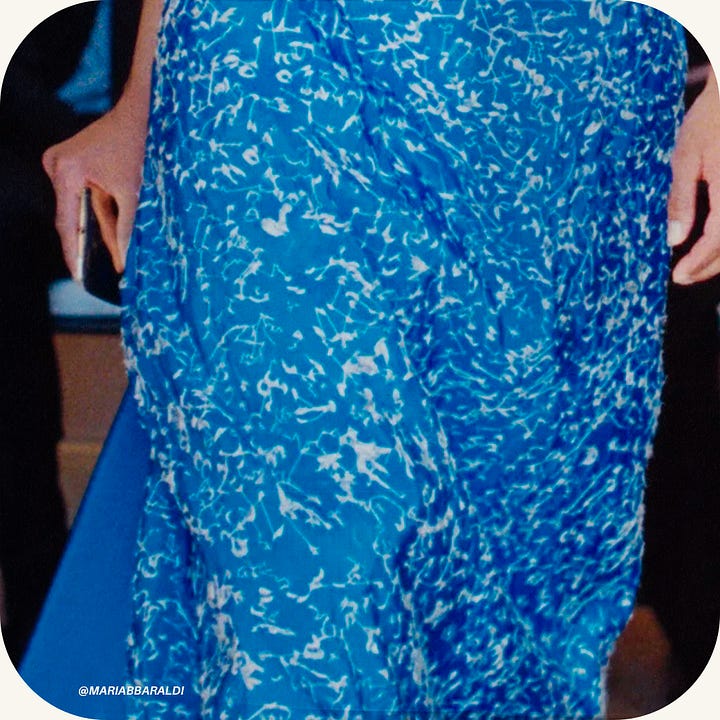
1. The Row Resort 2027: montage with Look 2 and Emilio Pucci print - 2. The Row Resort 2027: Look 25
Can you imagine The Row using an Emilio Pucci print like the first image here? Probably not.
The second image shows what they actually used in their Resort 2027 collection, still incorporating print and color, but in a way that aligns with the brand’s universe: minimal, controlled, and restrained
Now that you have the information… what do you do with it?
Look at your best-selling products and ask yourself:
Why are they working? Do they actually represent your brand?
Because sometimes, products sell well but don’t reflect what the brand stands for, especially when the brand is coming from a long period of misalignment.
If that’s your case, the goal is not to eliminate those products immediately, but try to evolve them.
Look at your references and ask:
How can I bring what I believe in into what already works?
Sometimes the answer is in small changes:
a different material
a better finish
a slight adjustment in silhouette
From here, it helps to think about the products in categories:
1. Revenue drivers (hero products)
These are the products that consistently sell, no matter the season. You just know people will like them and buy them.
2. Hype products
These are more trend-driven products or products with some type of innovation.
They come from a period of hype inside your brand, and sometimes, if they’re successful enought, they can become hero products.
3. Positioning or experimental products
Higher risk and bigger investment. These are the products that you want to test inside your brand (like The Row’s print example).
Sometimes, they can be products that are really successful on social media but don’t sell as much, because their main role in to help build brand perception.
If they’re accepted, they can become hype products or even hero products.
Not every product is supposed to perform the same way. That’s why it’s so important to analyze numbers and categorize your products, so you understand where you can invest more in stock.
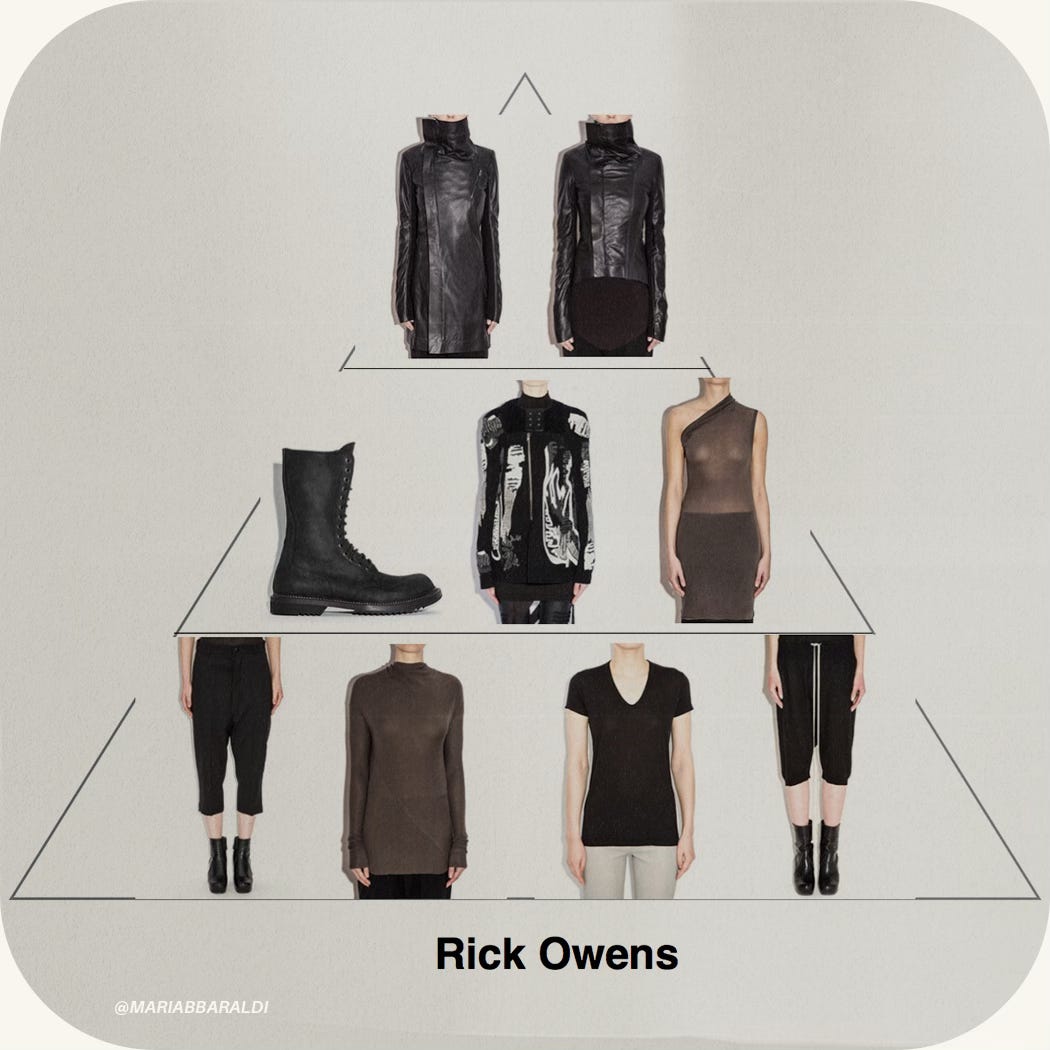
Rick Owens - Range Pyramid
But, if you want, I can write a specific essay about these products categories!
Let time (and your clients) give you the answers
As you apply this, reduce the number of launches and SKUs. You can refer back to the article about this strategy if you want to go deeper. This phase isn’t about growing faster, it’s about understanding and validating your products.
If you already have products that consistently sell, keep investing in them. And if you don’t love them, start improving them with small changes, like we discussed above.
Again, test new ideas in smaller quantities and talk to your customers. You can offer a discount or a small gift to encourage them to answer more detailed questions.
With time, the more data and information you gather, the easier it becomes to make decisions, refine your strategy, and come up with new ideas that actually make sense for your brand.
Because your brand will no longer be operating in the dark.
It will have a clear path, built from what your customer wants, what your brand stands for, and what your numbers are already telling you.
Hi! I’m Maria
If this made you realize that your collections are being built without a clear structure, you’re not alone.
And this is exactly the kind of work I do.
I help fashion founders connect brand strategy with product planning, so collections stop feeling like a guess, and start feeling like a system.
If you want to understand how this could work for your brand, simply reply to this email: contact@baraldi.co and tell me what you’re currently struggling with.
Wishing you clarity (and better launches) for your next collection!
Let’s keep in touch.
Discover more about high-performance web design. Follow us on Twitter and Instagram.

