For premium brands looking to grow with clarity.
Yes, everyone has already shared their opinions about Bottega Veneta’s latest show and its new creative direction.
But while most people rush to post their impressions, I prefer to observe, to understand what each collection is truly trying to say.
And it was in that pause that I noticed something far more valuable than a quick show review: how Bottega evolves without losing itself.
With that in mind, I want to talk about how Bottega has managed to change creative directors and still remain so faithful to its brand identity, and how you can apply that to your own premium brand.
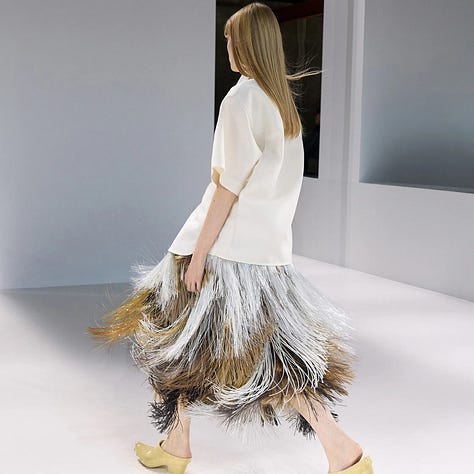
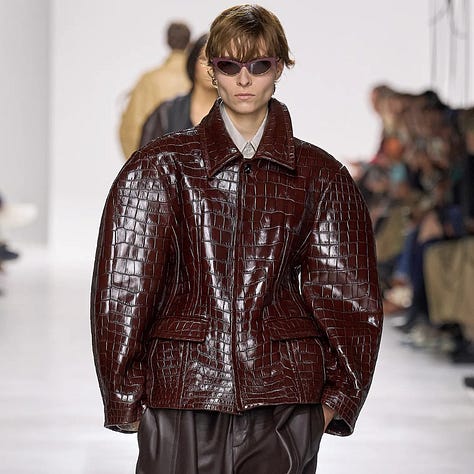
Bottega SS26 Collection
When following trends comes at a cost
Throughout Bottega’s history, every time there was a slight disconnect between product and brand, a solution soon followed.
But how is that possible?
Bottega was born as a leather accessories brand built on two core values:
Letting its products speak for themselves: no logos. The motto was “When your own initials are enough” (the logo appeared only on the inside of the accessories, with the letters BT — its initials).
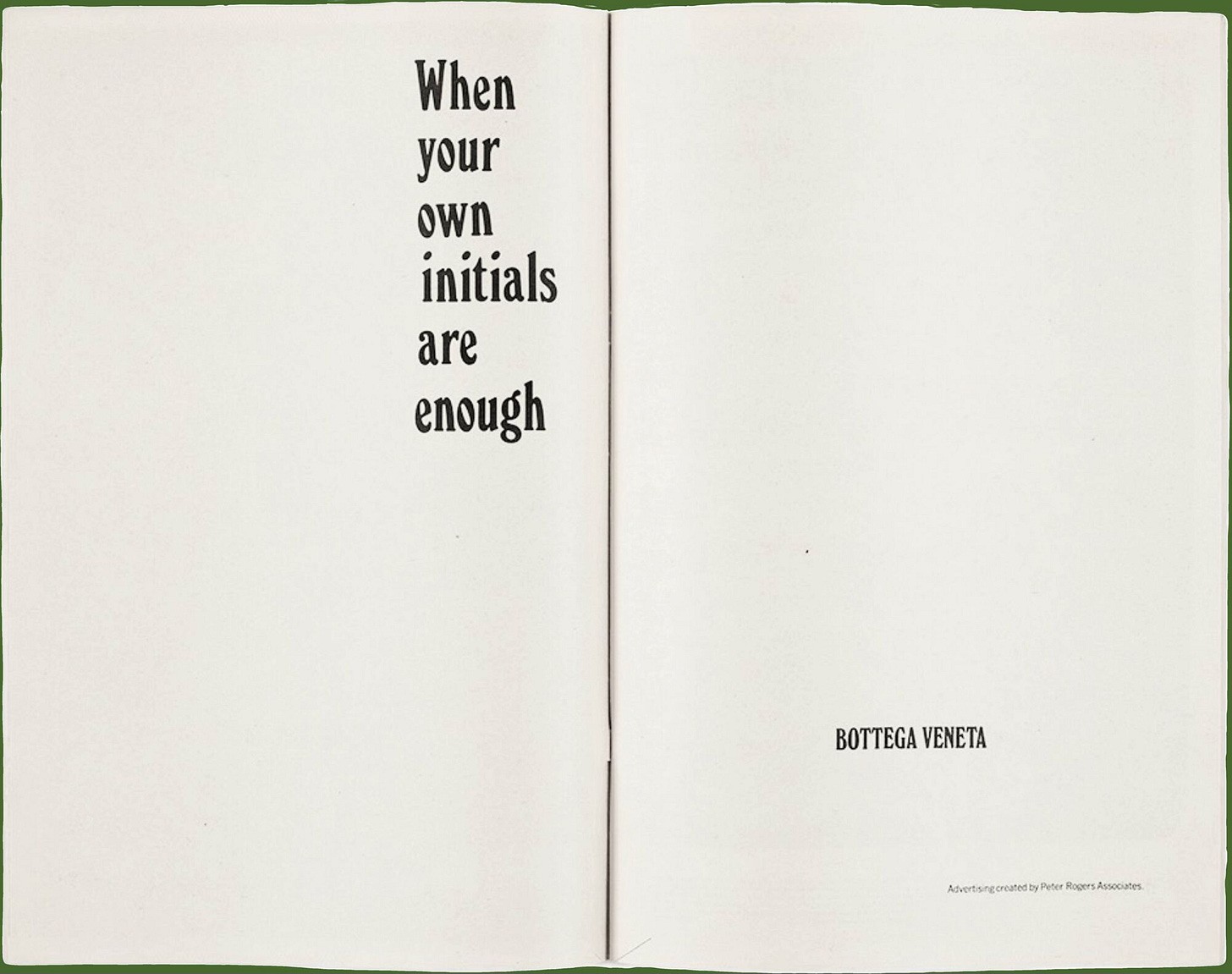
Honoring artisans and craftsmanship above all else.
In the 1990s, Bottega went through what many brands face today: the temptation to do “what seems to be working for everyone else.”
At the time, the creative director followed the logo trend, the exact opposite of the brand’s philosophy.
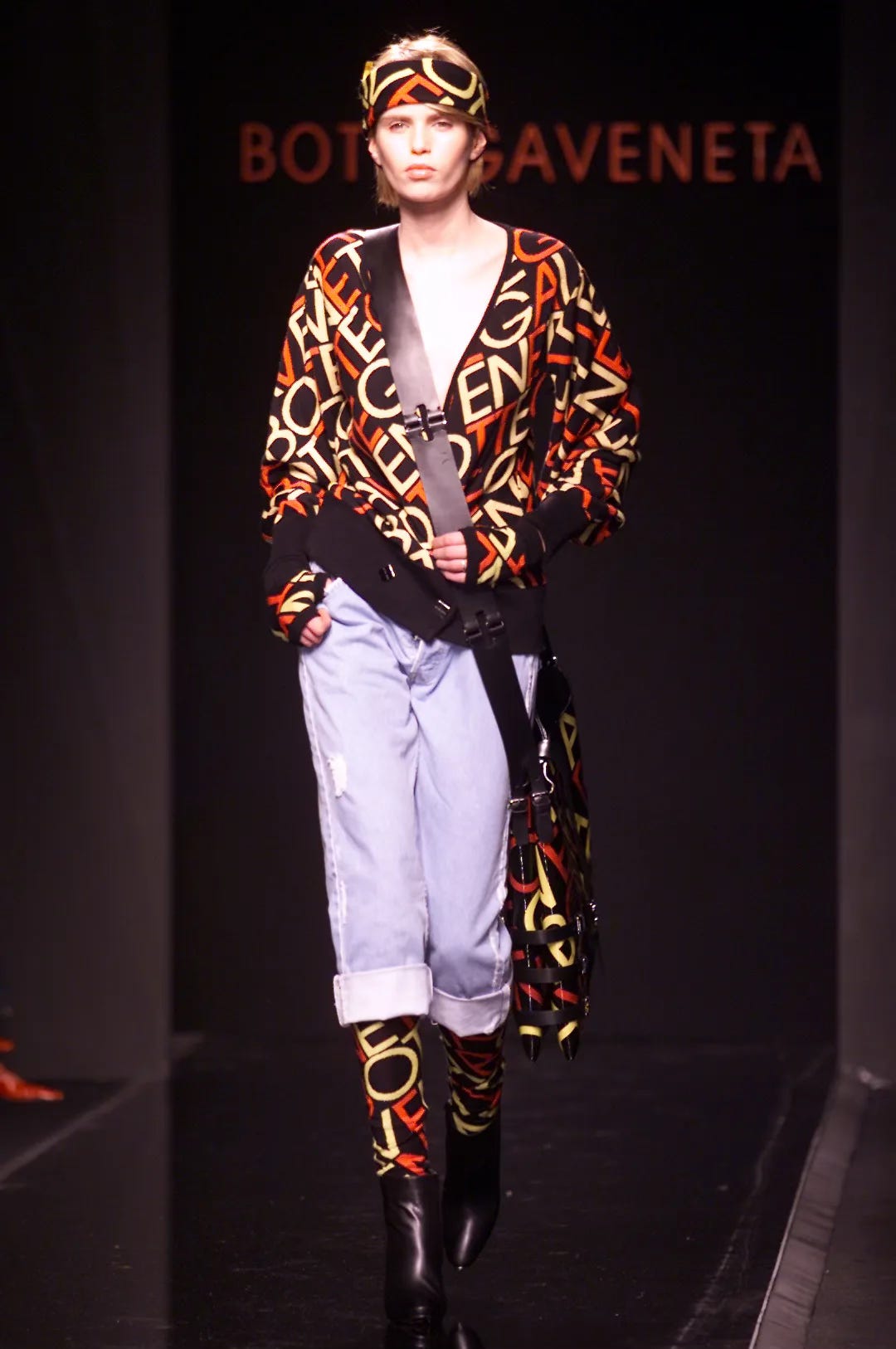
Bottega Veneta Fall 2001 by Giles Deacon
The result was predictable: a drop in sales and a loss of credibility.
But the recovery came quickly.
As soon as Tomas Maier took over, he cut through the noise and went back to the essentials:
high-quality products and absolute respect for craftsmanship.
For four years, he suspended ready-to-wear collections and rebuilt the brand’s reputation from its original DNA.
It was the first major sign of what would later prove to be a constant in Bottega’s story: whenever the brand strays from its values, it corrects its course by returning to its foundation.
Practical lesson: when that inner voice says, “but it’s working for everyone else,” don’t listen!
Continuity across different creative directors
From Tomas Maier to Daniel Lee, from Matthieu Blazy to Louise Trotter: each new director brought their own interpretation, yet the essence never changed.
How is that possible?
As I mentioned, Bottega’s values have always been clearly defined and consistently expressed across every touchpoint of the brand, following what I call the Premium Brand Funnel:
They know who they are.
A true luxury brand that values innovation rooted in functionality and timeless design, and, above all, craftsmanship.
This sets them apart, especially today, when so many luxury brands struggle to maintain their reputation because of declining quality.
Clarity about who you are as a brand is the first pillar of consistency.
They know how to position themselves.
Bottega eliminated discounts, handpicks its wholesales, and even has the freedom to redesign its spaces within those stores as it wishes, creating brand-specific environments and directly managing online sales.
This strengthens the perception of luxury and exclusivity, keeping the brand surrounded by desire.
Beyond that, the commitment to craft is visible even in its internal culture: its headquarters (an 18th-century villa restored by the brand) made Bottega the first Italian luxury company to earn LEED Platinum Certification.
Today, that same villa houses the atelier, administrative offices, an archive with over 5,000 handbags, a restaurant, and its own artisan school.
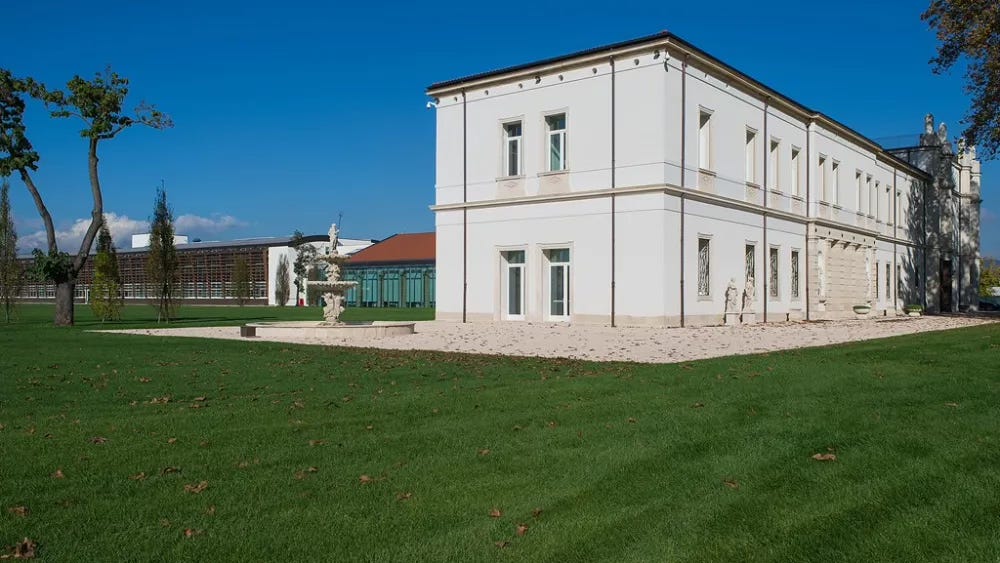
Ateliê Bottega Veneta - Montebello Vicentino, Italy
Positioning isn’t a statement, it’s a practice that requires courage (often to say no) and persistence.
They know how to build a narrative.
Everything mentioned above would mean nothing without strong communication.
The “Craft is our Language” campaign is the perfect example: it shows that real luxury requires time.
Craftsmanship is presented not just as a mark of quality, but as an expression of community, human connection, and the act of making.
A good narrative tells the world your positioning (that’s when it becomes a statement).
They translate all of it into their products.
Product is the last part of the equation, but also the most essential.
It doesn’t matter if you know who your brand is, position it well, and communicate it clearly, if none of it shows up in the product.
That’s where many brands fail: when the promise doesn’t meet the design.
The product is the ultimate proof of strategy. It’s where the promise becomes tangible.
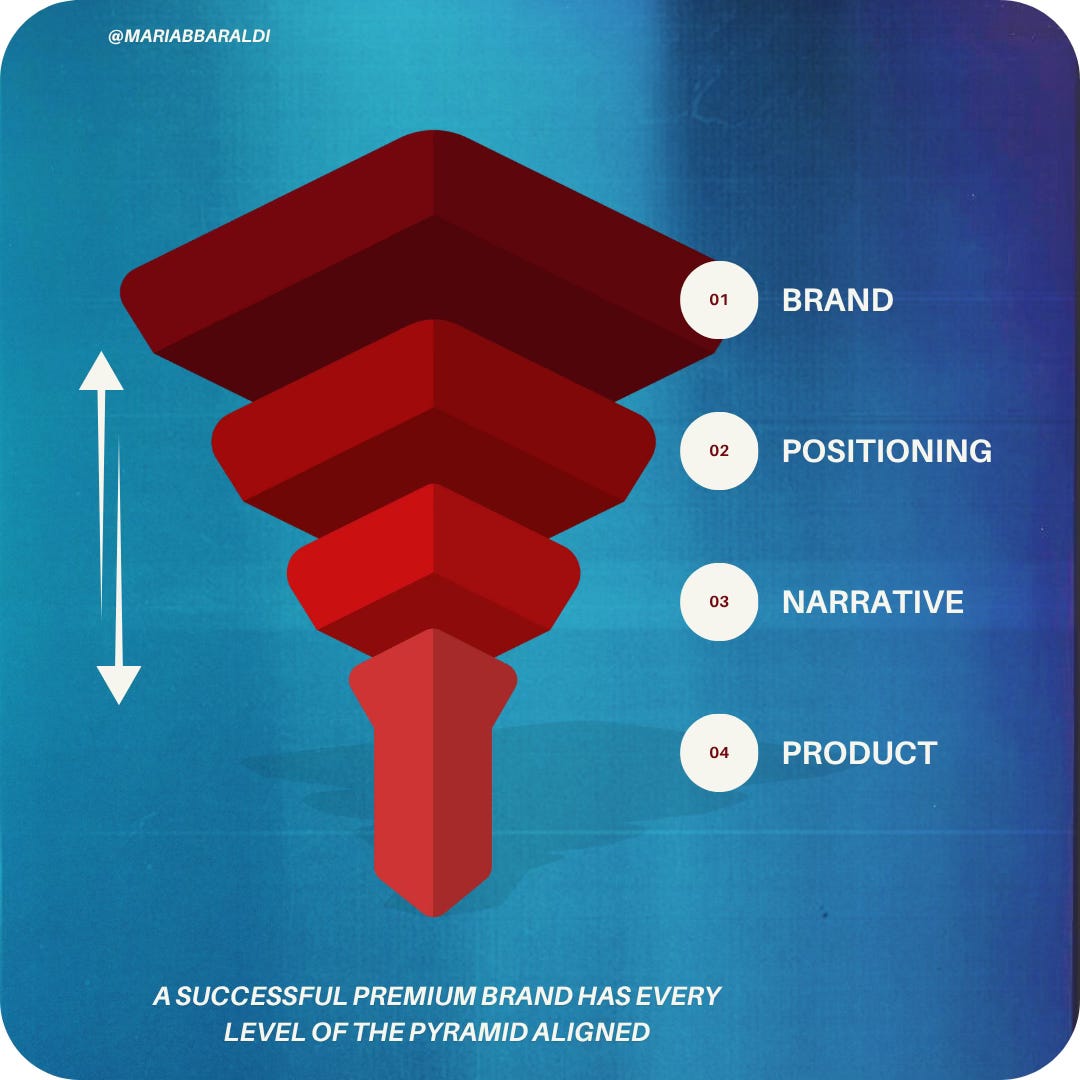
Premium Brand Funnel
How this shows up in the most recent collections
The Bottega we know today began in 2019 with Daniel Lee.
He followed every step of the funnel: brand → positioning → narrative → product.
He used traditional craftsmanship techniques, reinterpreted the intrecciato (making it more open), and created pieces that are instantly recognizable (no logo needed).
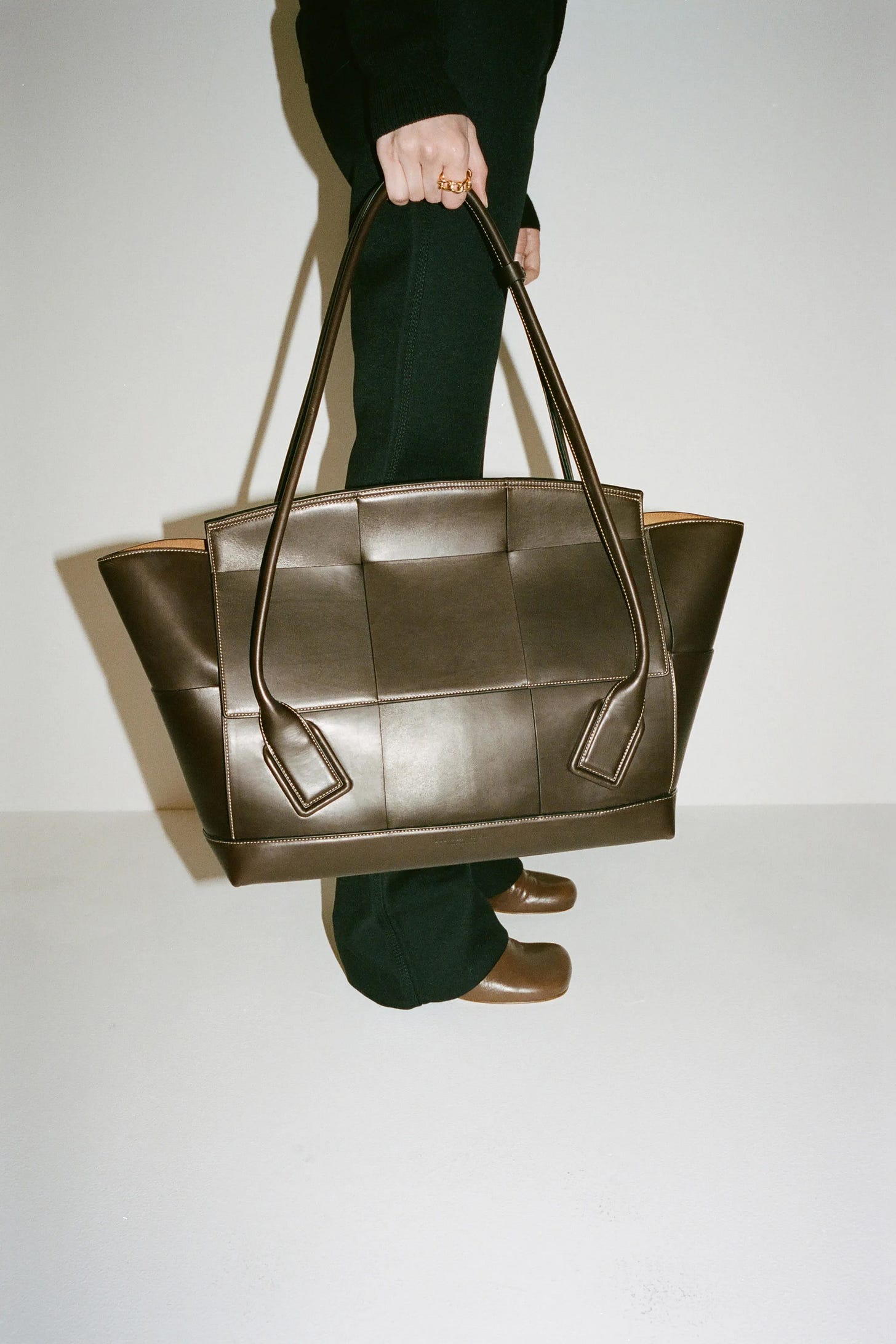
Bottega Veneta Pre-Fall 2019, by Daniel Lee
With him, Bottega had a younger and more playful spirit.
Matthieu Blazy continued that path, but gave the Bottega woman more maturity.
The playfulness appeared less in the silhouettes and more in the unexpected ways he applied handcrafted techniques.
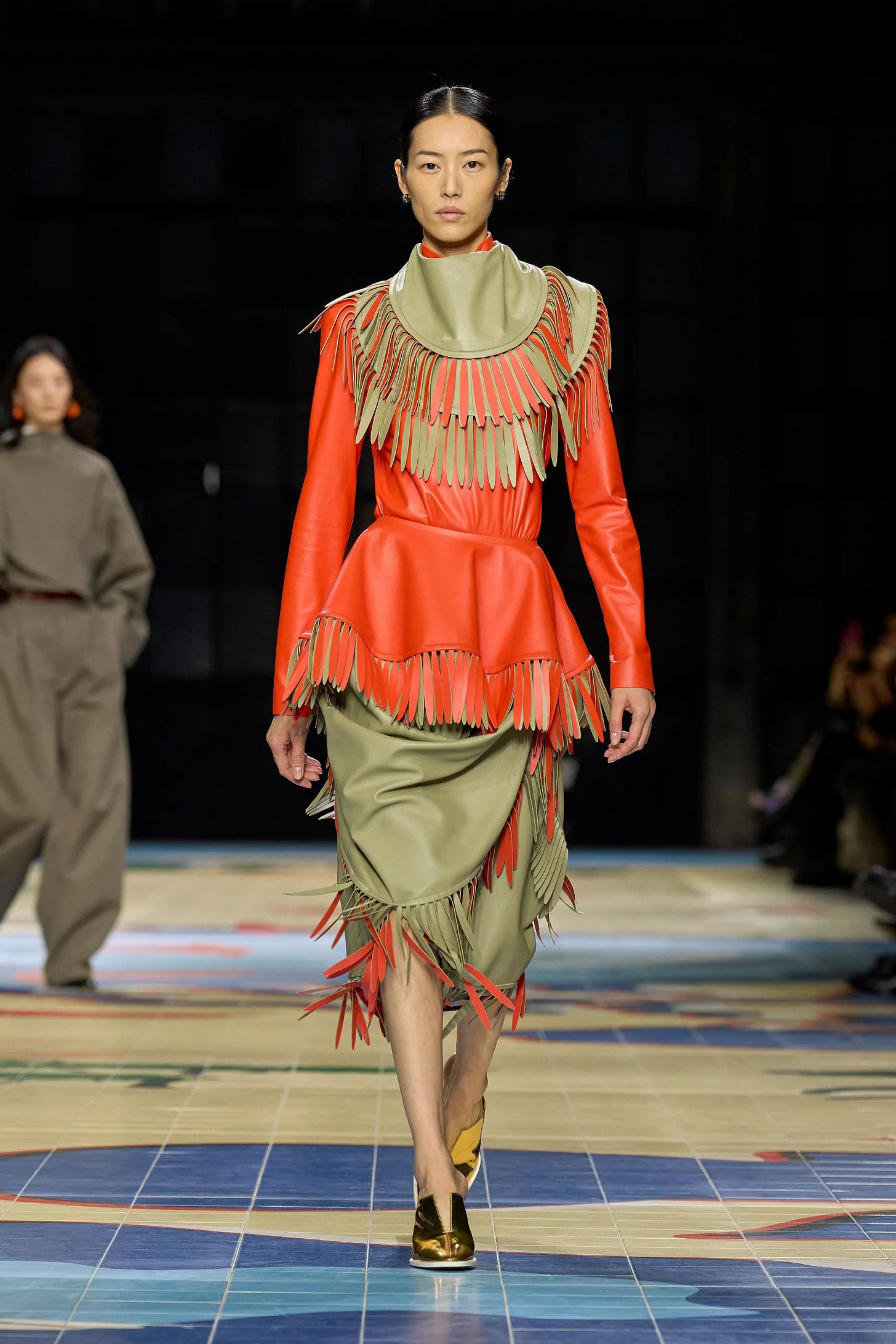
Bottega Veneta SS24, by Matthieu Blazy
In the SS26 collection, we see the continuation of that woman, now through the eyes of Louise Trotter.
She made her lighter, more everyday, yet still full of personality.
Since we’re talking about a brand that values innovation within functionality, this woman seeks practicality, without letting her identity fade into the basics.
She needs color, texture, and sculptural silhouettes that complement her presence (but never overpower it).
Everything in this collection reminded me of movement: crumpled fabrics, slipping straps, flowing materials, and deconstructed intrecciatos revealed a woman in constant motion. Trotter’s Bottega woman is in a hurry, she has places to go, ideas to bring to life.
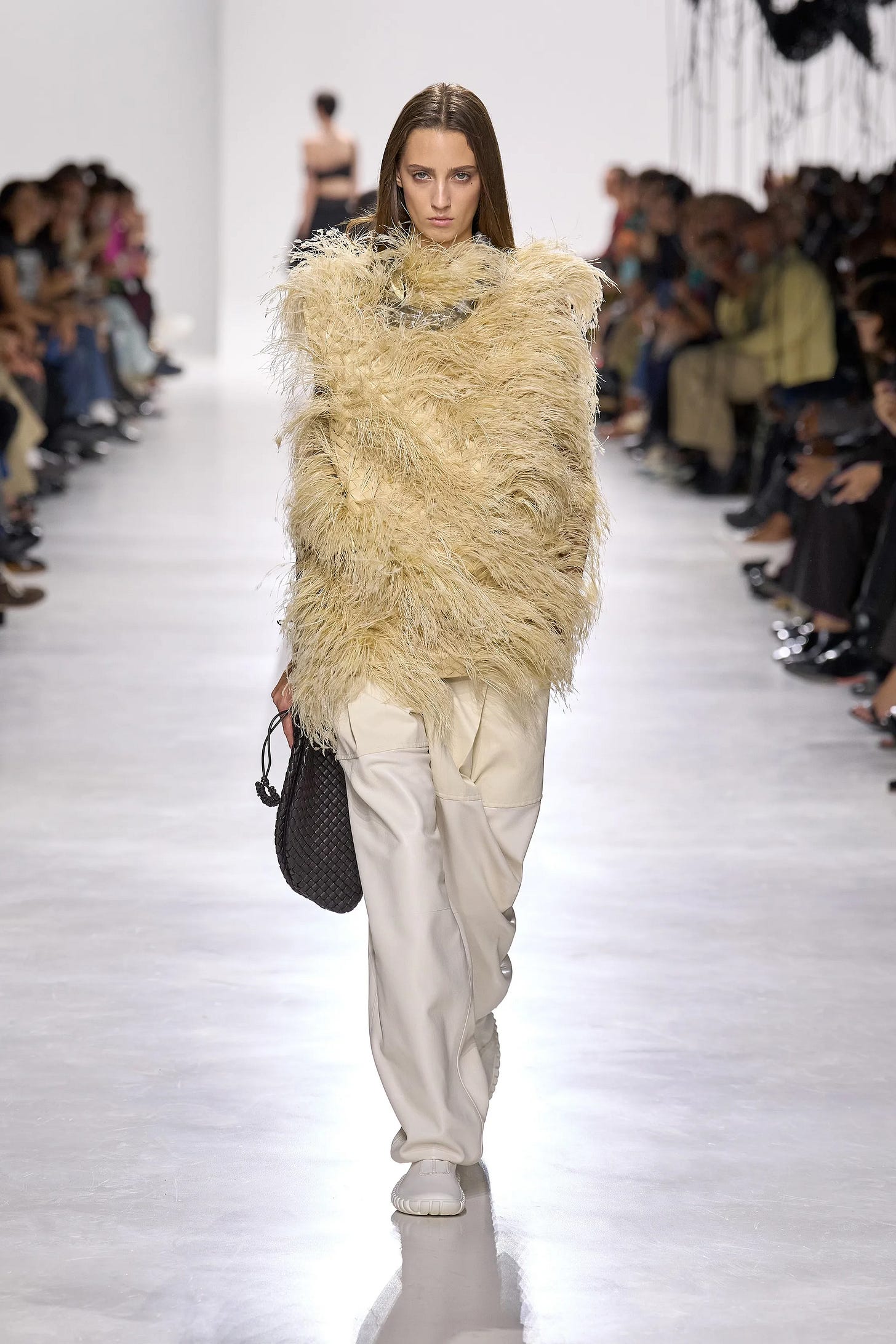
Bottega Veneta SS26, by Louise Trotter
I once came across a quote that said:
“The coolest women you know are never entirely put together. They’re cool precisely because they don’t spend all their time on their appearance.”
As I mentioned earlier, real luxury requires time, and it makes sense that the Bottega woman is always on the move. She dedicates her time to craft, which is more than luxury itself; it’s about community, and the act of making, of giving ideas material form.
Trotter didn’t erase what came before her, she edited it.
She kept the weight of craftsmanship and added lightness.
The Bottega woman remains the same; she’s just in motion now.
This movement isn’t about haste. It’s about purpose.
Real luxury requires time, the Bottega woman dedicates her time to craft (whatever her craft may be).
As we saw in the Craft is our Language campaign, luxury is about bringing ideas to life, and that takes time.
The product as a reflection of identity
The intrecciato is a construction (almost a sculpture) and you can see that same idea in the brand’s silhouettes.
Under Blazy, they were more organic; with Louise Trotter, they took on cleaner, more architectural lines, balanced by lightness and movement.
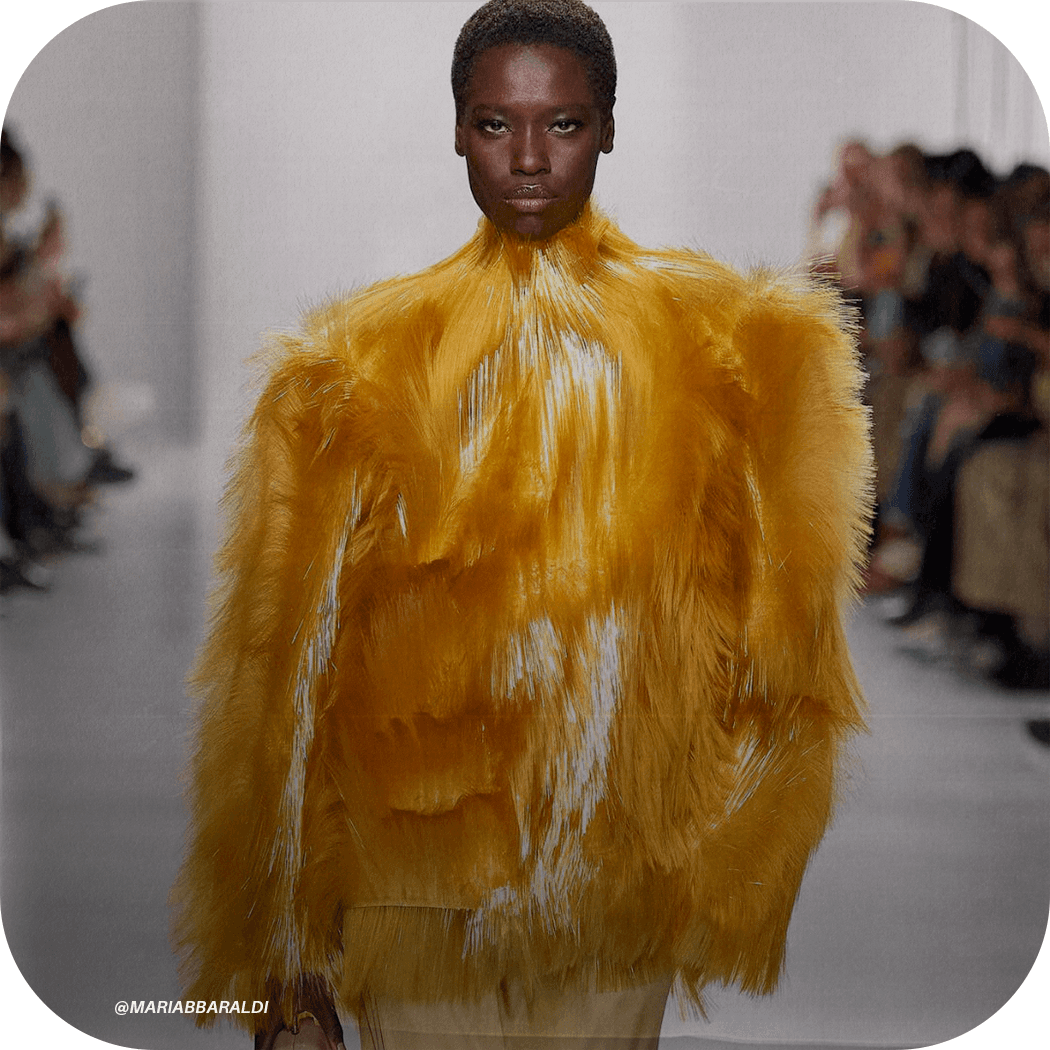
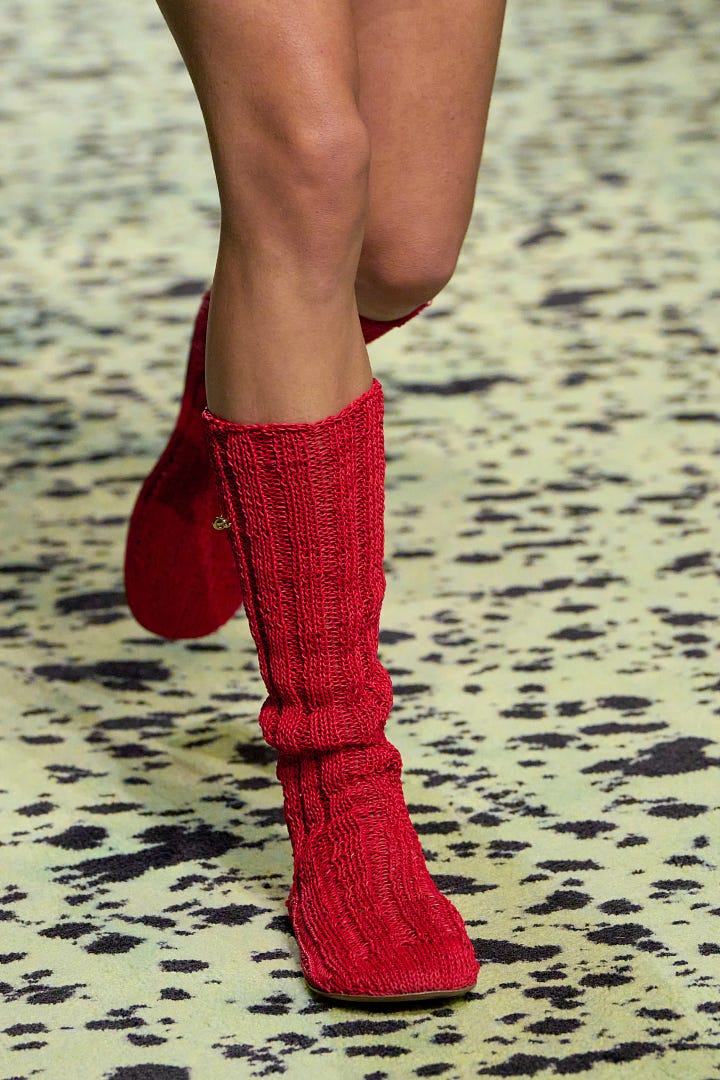
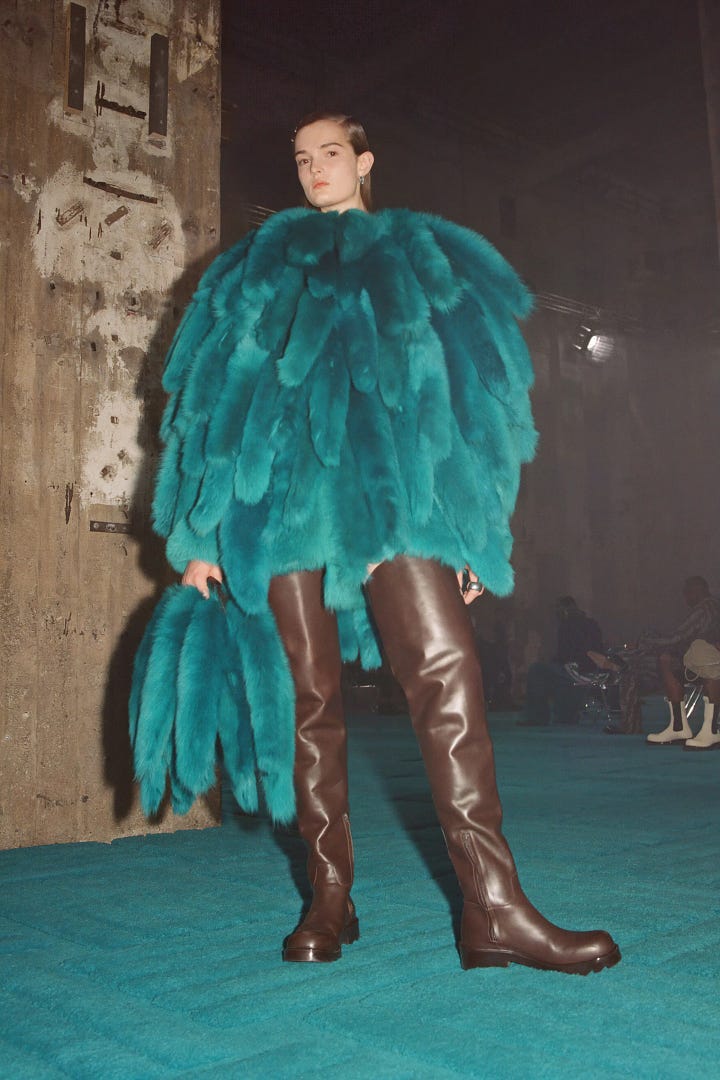
She preserved the high level of craftsmanship while translating it into minimalist forms, and a perfect example of that vision were the pieces made of recycled fiberglass “fur.”
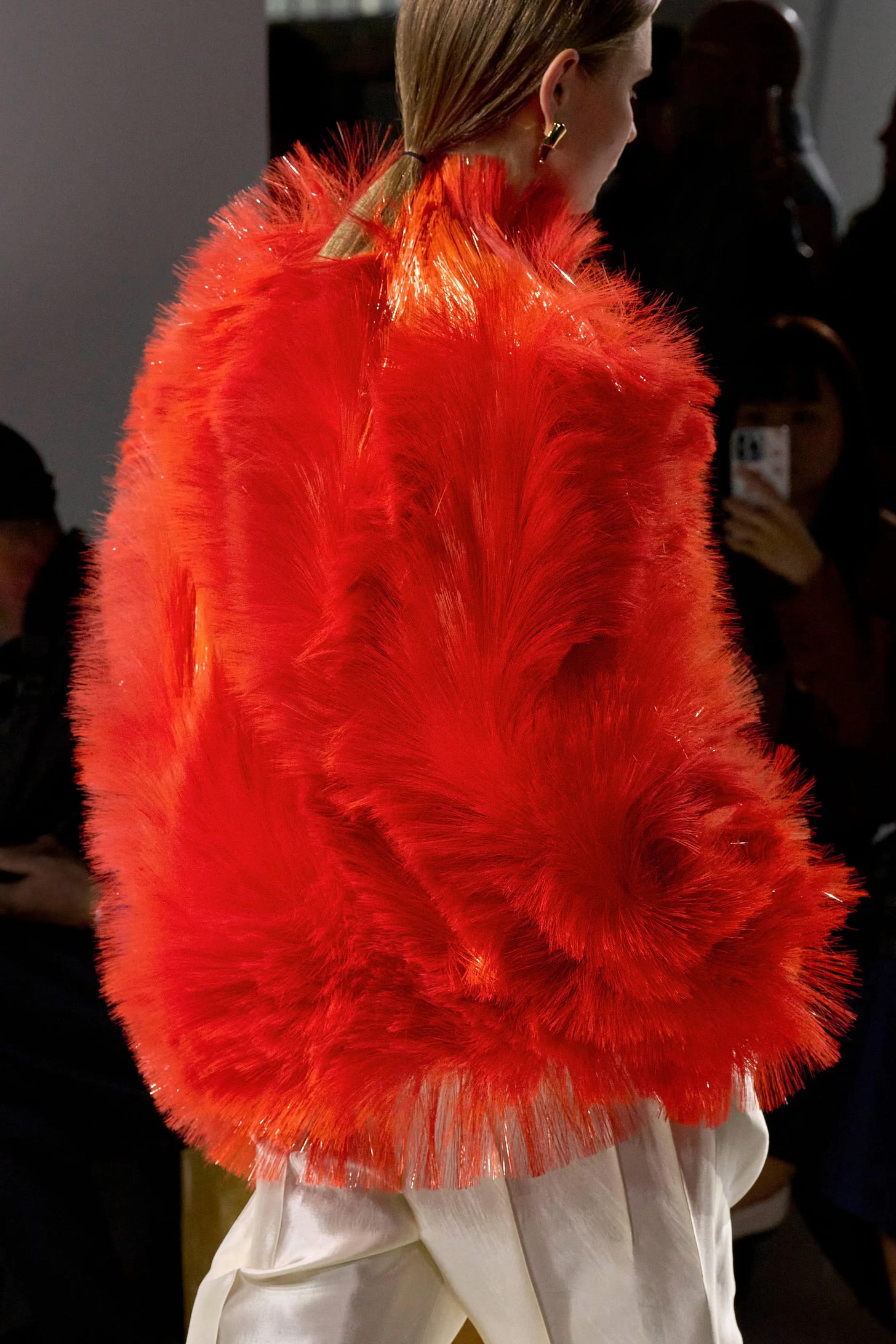
Bottega Veneta SS26, by Louise Trotter
That choice connected the trompe-l’œil concept (a material that appears to be something else at first glance), inherited from Blazy, with the playful touch of Daniel Lee, and still reflected the brand’s three core pillars: craft, innovation, and functional design.
This collection captures everything Bottega stands for:
Fine-quality materials
Extraordinary craftsmanship
Contemporary functionality
Timeless design
Bottega’s values have always been crystal clear.
Today, it’s one of the few brands able to change creative directors without losing itself, precisely because it has a solid internal structure built on those pillars.
It’s not just about making a piece with intrecciato, but about understanding the structure behind it and building new visual elements from there.
Applying it to your brand
If, like Bottega, you want to have well-defined pillars that sustain your brand for years (regardless of who’s on your creative team) it’s important to ask yourself:
What’s your brand’s story? Why and for whom was it created?
How can you turn those answers into business structure and value positioning?
How can you communicate that across every touchpoint: campaigns, e-commerce, unboxing?
And most importantly: how does all of this translate into your products?
Yes, it’s a lot to think about and define.
But once this work is done, you’ll never get lost chasing trends that don’t make sense, or feel frustrated when a client doesn’t understand your new products.
If you’d like to build these pillars within your brand, reach out to me at contact@baraldi.co
I’ve developed a method designed specifically to align branding and product for premium fashion brands.
Let’s keep in touch.
Discover more about high-performance web design. Follow us on Twitter and Instagram.

